Healthcare gives us access to more testing than ever before. Blood work, X-rays, ultrasound, mammography, CT, MRI, biopsies, genetic testing and many other technologies can provide incredibly valuable information.
But more testing is not always better testing. Every medical test has a purpose. Every test also has limitations. The important question is not whether one type of testing is “good” and another is “bad.” It is whether we are using the right test, for the right reason, at the right time.
Every Test Has Its Place
Structural imaging has transformed healthcare. X-rays can identify fractures. Ultrasound can visualize soft tissues and internal structures. Mammography provides detailed imaging of breast tissue. CT and MRI allow healthcare professionals to investigate anatomy in ways that were once impossible.
When these tests are clinically indicated, the information they provide can be extremely important.
At the same time, testing should always have a purpose. Tests can sometimes produce incidental findings, false-positive results, or findings that lead to additional investigations and procedures. In some situations, screening can also identify abnormalities that may never have caused harm during a person’s lifetime—a concept known as overdiagnosis.
This does not mean we should avoid testing. It means we should use testing thoughtfully and understand both its benefits and its limitations.
When More Testing Leads to More Testing
One of the challenges in modern healthcare is that one test can sometimes begin a cascade. An unexpected finding may lead to another scan, another consultation, additional imaging, or an invasive procedure such as a biopsy. Sometimes that follow-up is absolutely necessary. Other times, the finding ultimately proves to be harmless.
There can also be an emotional cost. Waiting for results, repeating tests, and investigating uncertain findings can create considerable anxiety.
This is why informed healthcare matters. Patients should understand why a test is being recommended, what information it can provide, what it cannot tell us, and what may happen next depending on the result.
The goal should never be to perform the greatest number of tests. The goal should be to obtain the information that is genuinely useful for making appropriate healthcare decisions.
Where Thermography Fits
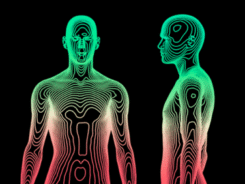
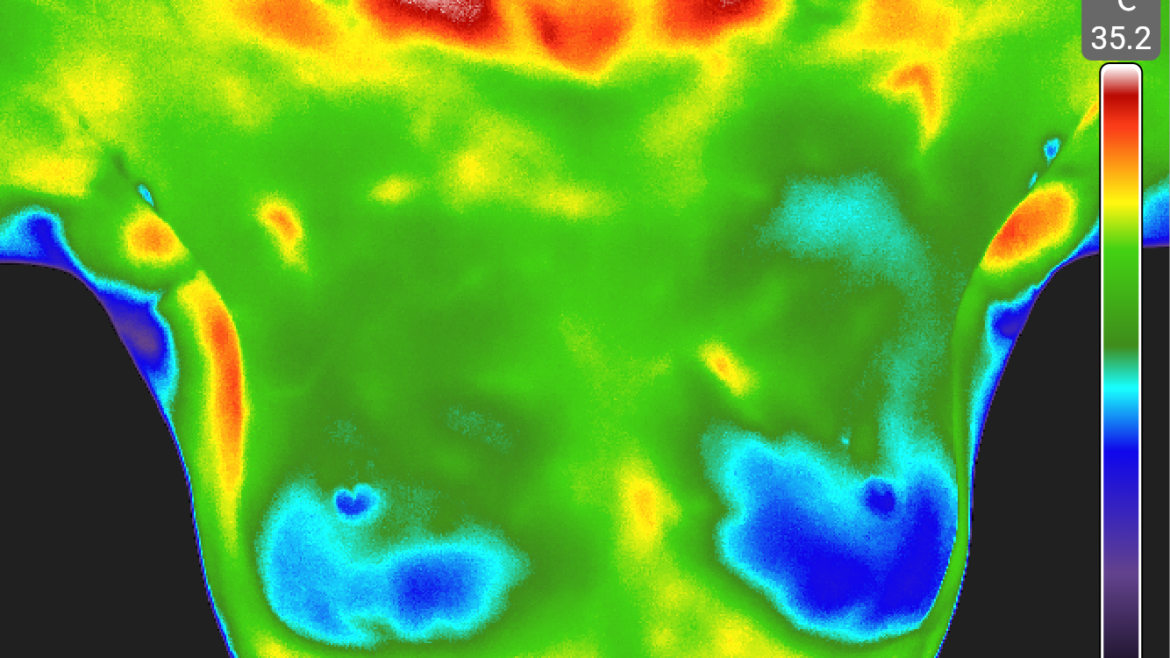
Thermography provides a very different type of information. Rather than looking primarily at anatomy or structure, thermography looks at function. A specialized infrared camera measures heat naturally emitted from the skin, providing a visual representation of physiological activity throughout the body.
Thermography is non-invasive, does not require contact with the body, and does not use ionizing radiation. This makes it particularly useful when we want to establish a physiological baseline, look at whole-body health, or monitor changes over time. But thermography is not a replacement for structural or diagnostic testing.
If a thermal study identifies an area that deserves further attention, the appropriate next step may be an ultrasound, X-ray, mammogram, MRI, blood work, dental evaluation, or another form of investigation depending on the findings and the person’s health history. That is how different forms of testing should work together.
Looking at the Body Before Looking for Disease
One of the things I believe we sometimes lose in healthcare is the opportunity to look at how the body is functioning before our attention becomes focused entirely on diagnosing a disease.
Thermography gives us another perspective.
A full-body study can identify areas of inflammation, organ-system stress, circulatory changes, and musculoskeletal imbalance that may warrant attention. For someone already experiencing symptoms, these findings may help identify possible underlying contributing factors and provide direction for further investigation.
For someone who feels well, thermography can be used proactively to establish a personal baseline and monitor health over time.
It also provides a way to follow the effectiveness of treatment protocols, rehabilitation, and proactive lifestyle changes without repeatedly exposing the individual to more invasive forms of investigation when those tests are not otherwise clinically indicated.
Breast Health Is No Different
This philosophy is particularly important when discussing breast thermography.
Thermography has historically been promoted either against mammography or as an alternative to mammography. I don’t believe either position serves women particularly well.
Thermography is not a breast cancer test, and mammography and thermography are not competing technologies.
They provide different information.
Mammography looks at breast structure and remains an established screening tool. Thermography provides physiological information and may be used as an adjunctive assessment.
And just as importantly, the breasts are not separate from the rest of the body. Breast health may be influenced by hormonal activity, inflammation, infection, circulation, lymphatic flow, musculoskeletal imbalances, physiological stress, and injury.
This is why we prefer to include the breasts within a full-body thermography study rather than treating breast thermography as an isolated test.
A More Thoughtful Approach to Testing
Healthcare should not be about choosing one technology over another. It should be about understanding what each test does well and using that information appropriately.
Sometimes structural imaging is exactly what is needed. Sometimes laboratory testing is necessary. Sometimes a biopsy is the appropriate next step. And sometimes a non-invasive physiological assessment such as thermography can provide valuable information before deciding what should be investigated further.
Every test has its place and its purpose.
The goal is to use the least invasive and most appropriate tools available to gather meaningful information, avoid unnecessary testing where possible, and escalate to more specific diagnostic investigation when there is a reason to do so.
Thermography adds another piece to that process—not by replacing existing technologies, but by giving us a different way to look at health.
Not simply at structure, but at function. Not simply at one body part, but at the whole person.
Healthier is Smarter!
Sharon Edwards – R(Hom), DNM, RHN, CCT